Why Do All-on-X Full-Arch Bridges Still Break? A Practical Guide for Clinics and Labs
Apr 13, 2026
The Question Many Clinics and Labs Are Asking
All-on-X has become a standard solution for full-arch rehabilitation. With zirconia widely used as the material of choice, expectations for strength and longevity are high.
Yet, one question continues to come up:
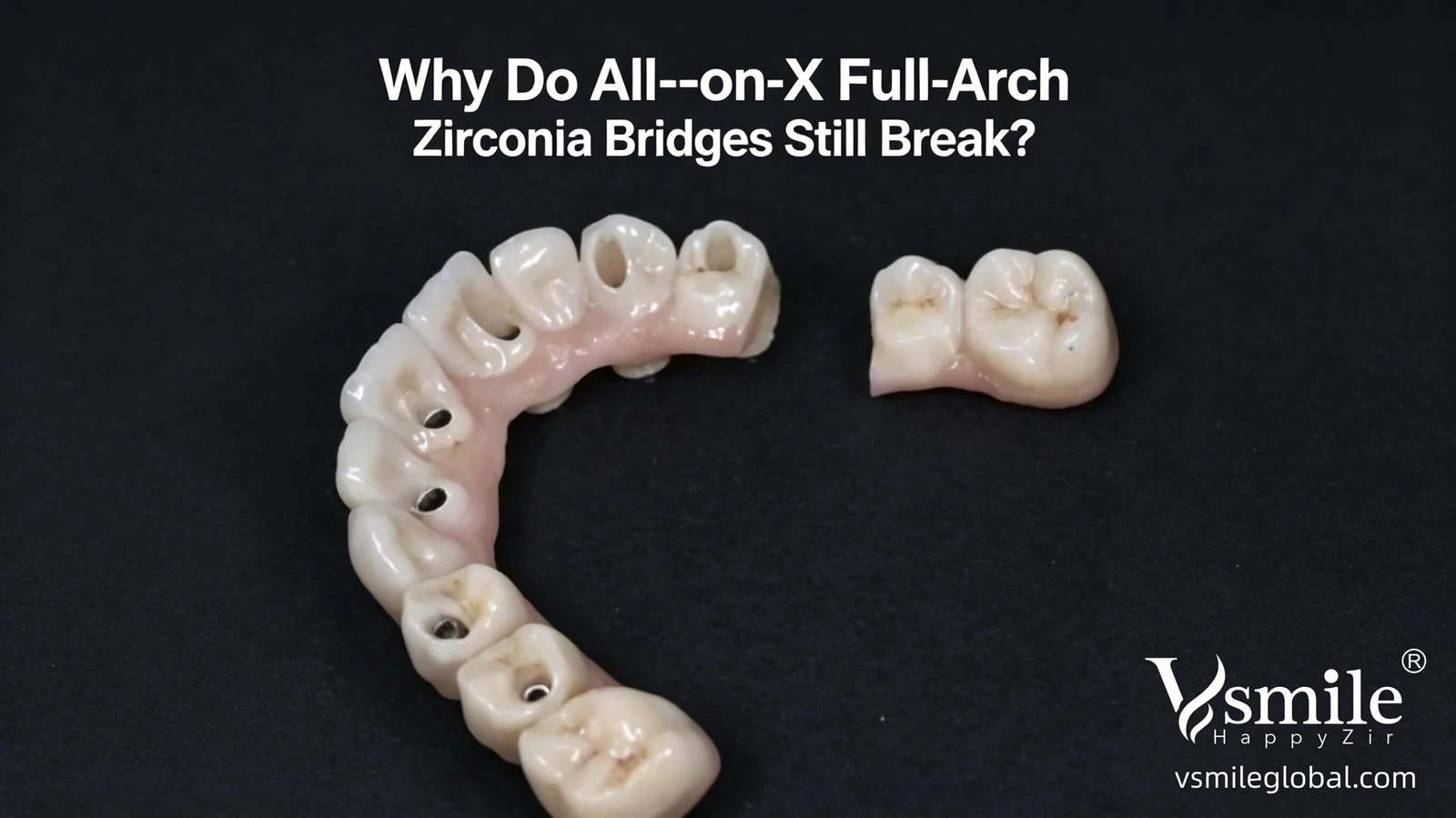
Why do some full-arch zirconia bridges still break?
The Reality: It's Not Just About the Material
Zirconia is strong-but strength alone does not guarantee long-term success.
In most cases, fractures are the result of multiple factors working together:
Design limitations
Material selection trade-offs
Processing inconsistencies
Occlusal overload
Understanding this interaction is key to improving outcomes.
Common Causes of Full-Arch Fracture
1. Connector Areas Are Too Weak
Small or thin connectors are one of the most frequent causes of fracture. These areas experience the highest stress during function.
2. Cantilevers Are Too Long
Long cantilevers significantly increase bending forces, especially in posterior regions.
3. High Translucency Materials Used in High-Stress Cases
More aesthetic zirconia is not always suitable for heavy-load situations.
4. Surface Damage During Adjustment
Improper grinding or polishing can introduce microcracks that weaken the structure.
5. Occlusal Overload
Bruxism and uneven force distribution can accelerate crack growth.
What Can Be Done Differently?
Improving full-arch zirconia performance does not require drastic changes-but it does require better coordination between clinic and lab.
Choose Materials Based on Function
Not every case needs maximum translucency. For high-load situations, prioritize strength and toughness.
Optimize Design Early
Ensure adequate connector size and avoid unnecessary cantilever length.
Control the Workflow
Standardized milling, sintering, and finishing procedures reduce variability and risk.
Communicate Between Clinic and Lab
Clear communication about occlusion, patient habits, and case requirements leads to better decisions.
A More Predictable Approach to All-on-X
Clinics and dental labs that achieve consistent results often share one thing in common:
They treat All-on-X not as a single product-but as a coordinated system.
When material selection, design, processing, and clinical factors are aligned, fracture risks can be significantly reduced.
Zirconia remains one of the most reliable materials for full-arch restorations-but only when used with the right strategy.
By focusing on real causes rather than assumptions, clinics and labs can improve durability, reduce remakes, and deliver better long-term outcomes.
Want to reduce fracture risks in your All-on-X cases? Reach out to learn how the right zirconia materials and workflow strategies can make a difference.