


Preparation Design For Partial-Coverage Restorations
Aug 23, 2023
Proper preparation design is the key to ensuring optimal longevity for partial-coverage restorations. This article provides clinical guidelines on how to achieve successful preparation design for partial-coverage restorations.
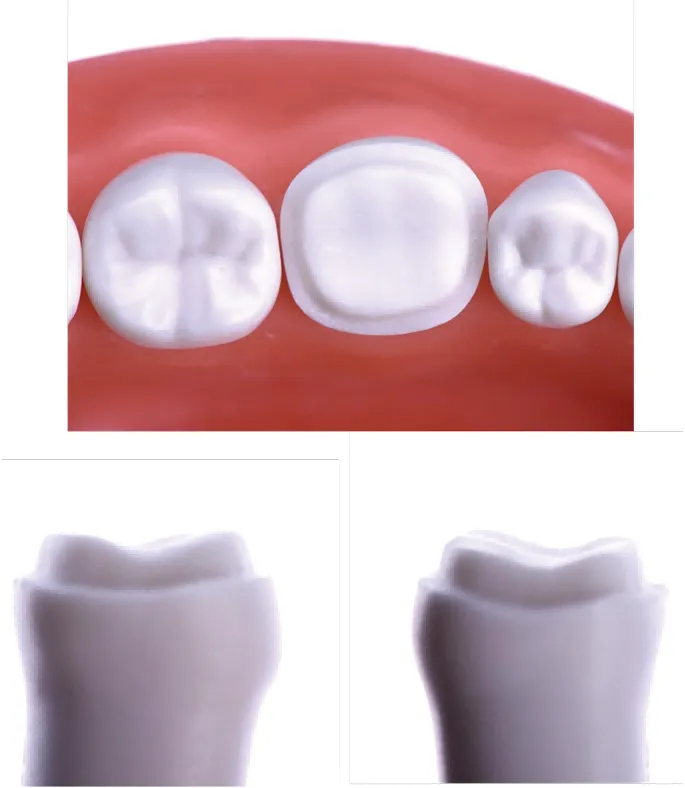
Divergence of Walls: The walls of the preparation should diverge occlusal at approximately 10-20 degrees. This allows a path of insertion and helps avoid undercuts.
Rounded Internal Line Angles: All internal line angles should be rounded to avoid stress concentration spots. A minimum radius of 1mm is recommended. Sharp line angles act as fracture initiation sites and are detrimental to the tooth-restoration complex.
Circumferential Enamel: The presence of enamel for bonding 360 degrees circumferentially around the margin is critical. This provides durable resin-enamel bonds for retention of the restoration.
Cuspal Coverage: For enamel-supported cusps with less than 2mm of remaining dentin thickness, cuspal coverage is indicated to prevent future fractures.
Margin Placement: The margin should be placed in enamel supragingival, avoiding dentin and cementum which have much lower bond strengths.
Tapered Occlusal Reduction: The occlusal surface reduction should be tapered, with deeper reduction centrally and less towards the margin. This provides appropriate thickness and contour.
Simplicity: The preparation design should be as simple as possible. Complex geometries are hard to fabricate accurately and lead to poorly fitting restorations.
Conclusion: By following proper guidelines for preparation design, dentists can achieve successful and long-lasting partial-coverage restorations. Simpler is better when it comes to preparation geometry.


