Developments Of Dental Zirconia
Feb 15, 2023
The growing emphasis on esthetics in dentistry has aided in the development of a material with sufficient strength and longevity to replace metal. Unlike earlier forms of all-ceramic restorations, zirconia has superior strength and esthetics.
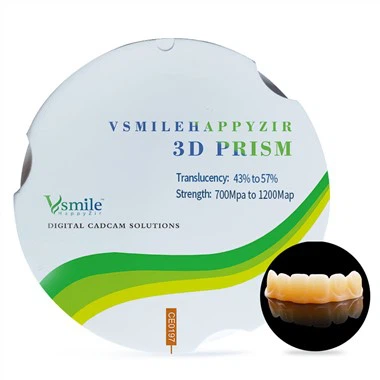
The development of novel technologies, materials, and biomechanics has fundamentally altered the approach to replacing dental anatomical structures. Using modern 3D multilayering and CAD/CAM technology, dental zirconia blanks have provided an optimal solution to dental prosthetic restorations. It is one of the best materials for creating long-lasting and aesthetically pleasing dental crowns. Dental Zirconia Blank is the foundation of most modern dental labs because it is the solution to a wide range of clinical situations such as long-span bridges, inlays, veneers, and dental crowns.
Another type of ceramic material that is used as a substitute for metals and alloys in the manufacture of dental prosthetics is zirconia dental disc. It is useful for filling teeth lesions, fractures, and abscesses. The most important characteristic that distinguishes zirconia from other materials is its biocompatibility, which allows it to integrate with living tissues without causing harm.
Zirconia dental blocks are a type of dental material containing zirconium oxide. It can be used to replace amalgam and metal restorations. Zirconia dental block is used instead of amalgam to create fillings, crowns, and bridges, as well as direct tooth implants.
The cost of zirconia blocks varies according to their application and procedure. The size of the tooth or crown is another factor that influences the cost of the zirconia cap. Because of its unique properties, it is slightly more expensive than other dental blocks.