Building An In-House Dental Lab: A Step-by-Step Guide For Modern Clinics
Nov 20, 2025
Building an in-house dental lab is one of the most effective ways for clinics to increase treatment speed, improve patient satisfaction, and reduce outsourcing costs. With today's digital dentistry technologies, even small practices can establish compact and highly productive labs.
1. Define Your Clinical Needs
Start by identifying the services you want to offer: crowns, bridges, veneers, implant restorations, temporary prosthetics, or orthodontic appliances. The scope of your treatment plan determines the materials and equipment you will need.
2. Choose Reliable CAD/CAM Materials
Your in-house lab's foundation lies in the material inventory. Popular choices include:
Zirconia Blocks for crowns and bridges
PMMA Discs for temporary restorations
PEEK & Titanium Discs for implant prosthetics
Wax Discs, Stain & Glaze Kits, and Effect Color Liquid Kits
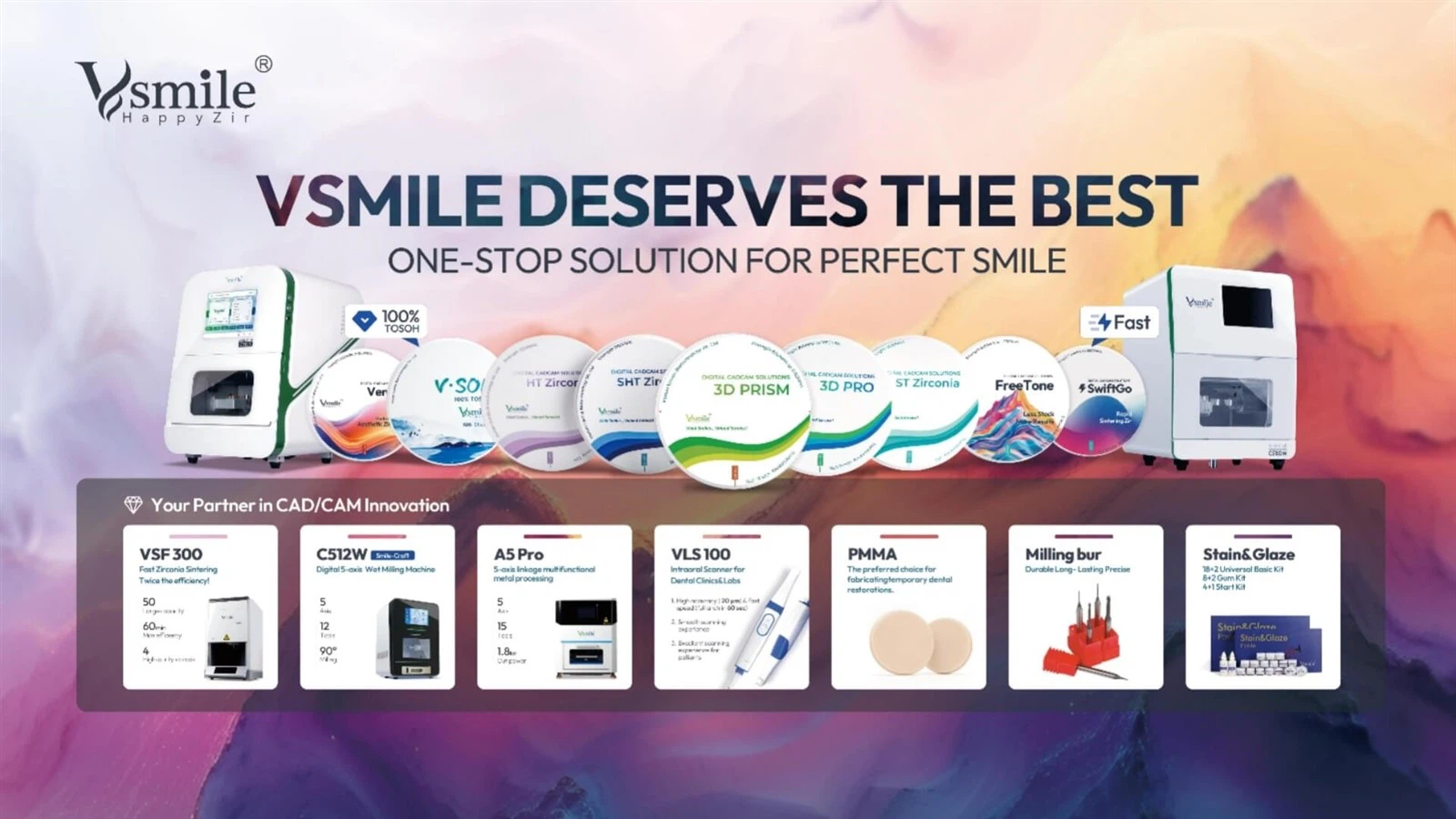
Vsmile provides a full range of CAD/CAM materials with proven consistency, ideal for clinics building efficient digital workflows.
3. Invest in Essential Digital Equipment
A high-quality digital setup dramatically increases productivity. Key equipment includes:
Lab or Intraoral Scanner – captures accurate impressions
Dental Milling Machine – produces zirconia, PMMA, titanium, and wax restorations
Sintering & Porcelain Furnace – for zirconia and aesthetic ceramics
3D Printer – for models, trays, and surgical guides
For fully integrated workflows, the Vsmile C518DW dry & wet milling machine and Vsmile 3D scanners provide stable performance and excellent precision.
4. Prepare Tools & Accessories
Milling tools, polishing kits, grinding burs, and cleaning materials ensure consistent output and longer equipment life. Selecting high-quality tools reduces remakes and time loss.
5. Optimize Your Workflow
Separate the space into scanning, designing, milling, sintering, finishing, and glazing zones. A clear layout avoids bottlenecks and increases daily production.
6. Evaluate Costs and ROI
Most clinics recover their investment within 12–24 months due to savings on outsource fees and increased patient case acceptance.